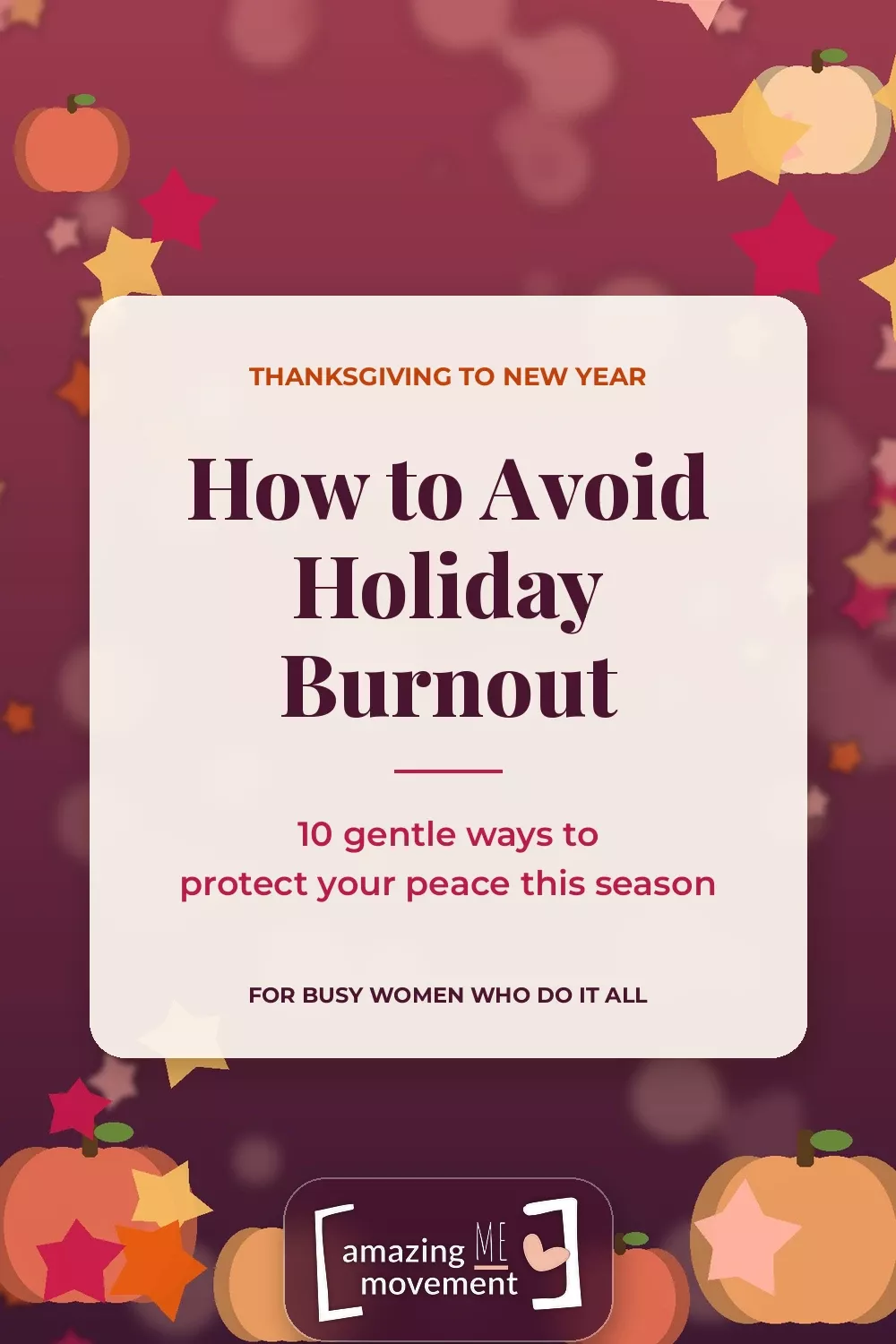
Halloween candy is barely put away, and somehow your calendar already looks like a game of Tetris. Thanksgiving menus, work deadlines before the holidays, school events, gift lists, travel plans, and that group chat that will not stop buzzing. If you are already tired just reading this, you are not alone, and you are exactly who this guide on how to avoid holiday burnout was written for.
The good news? Holiday burnout is not a personality flaw or proof that you cannot handle your life. It is usually a sign that you are carrying too much for too long with too little rest. And because November is just getting started, you still have time to plan a season that feels warm instead of frantic.
What Is Holiday Burnout, Really?
Let’s be honest about the word first. In the WHO’s classification, burnout is a workplace concept, not a medical condition. The World Health Organization describes burnout in ICD-11 as a syndrome resulting from chronic workplace stress, marked by feelings of energy depletion or exhaustion, mental distance or cynicism about your job, and reduced effectiveness. The WHO also says the term should not be applied to other areas of life.
So “holiday burnout” is an everyday phrase, not a diagnosis. But the feeling it describes is very real. It is that drained, short-tempered, running on fumes state that shows up when seasonal pressure piles on top of an already full life. If you are a working woman, it often looks like doing your job by day and running the holidays by night. If work stress is already high, our guide on how to recover from burnout when you cannot quit your job is a good companion to this one.
Why the Holidays Feel So Heavy
The numbers back up what your nervous system already knows. In a 2023 poll by the American Psychological Association, nearly nine in 10 U.S. adults (89%) said concerns such as money, missing loved ones, and anticipating family conflict cause them stress during the holiday season. Around two in five said their stress goes up between November and January, 43% said holiday stress gets in the way of enjoying the holidays, and 36% said the holidays feel like a competition.
Money topped the list. Fifty-eight percent of adults said spending too much or not having enough to spend stresses them out, followed by finding the right gifts (40%) and missing family or loved ones (38%). And 72% agreed the season can feel bittersweet. So if you feel joyful and exhausted at the same time, that mix is completely normal.
Women may feel it most. An earlier APA survey found that women are more likely than men to report heightened stress levels during the holiday season, and less likely to take time to relax or manage that stress in healthy ways. Translation: many of us are the default planner, shopper, cook, and emotional event coordinator, and we forget to put ourselves on the list.
10 Gentle Ways to Avoid Holiday Burnout This Season
You do not need a total life overhaul. Pick two or three of these ideas and start this week. Small, steady changes beat a big plan you abandon by Thanksgiving.
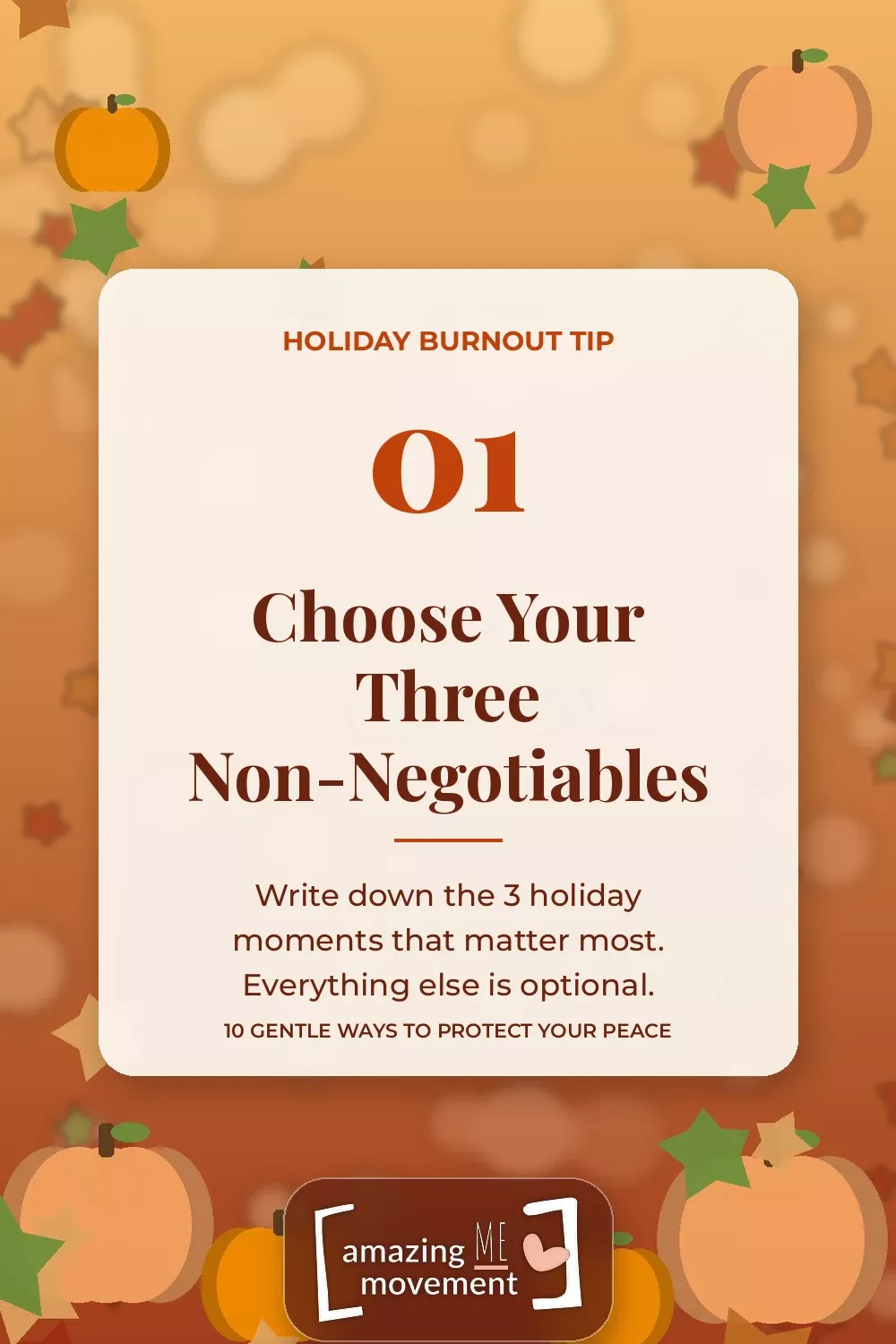
1. Choose Your Three Non-Negotiables
Grab a sticky note and write down the three holiday moments that truly matter to you. Maybe it is Thanksgiving dinner with your sister, a cozy movie night with your kids, and one quiet morning to yourself. Everything else becomes optional. When a new request pops up, you can ask a simple question: does this protect one of my three, or does it compete with them?
2. Plan a Good Enough Thanksgiving
Perfection is the fastest road to exhaustion. In the APA poll, managing expectations was one of the most common ways people coped with holiday stress, used by 38% of those who felt stressed. That might mean store-bought pie, paper plates, or a potluck where everyone brings one dish. Nobody remembers whether the napkins matched. They remember whether you were relaxed enough to laugh.
3. Set a Holiday Budget Before November Gets Loud
Since money is the top holiday stressor, decide your number now, before the sales emails start shouting. Write down a total for gifts, food, travel, and hosting, then divide it by person or event. Suggest a name draw or a gift limit with your family or friends. You will be surprised how many people are relieved that someone finally said it out loud.
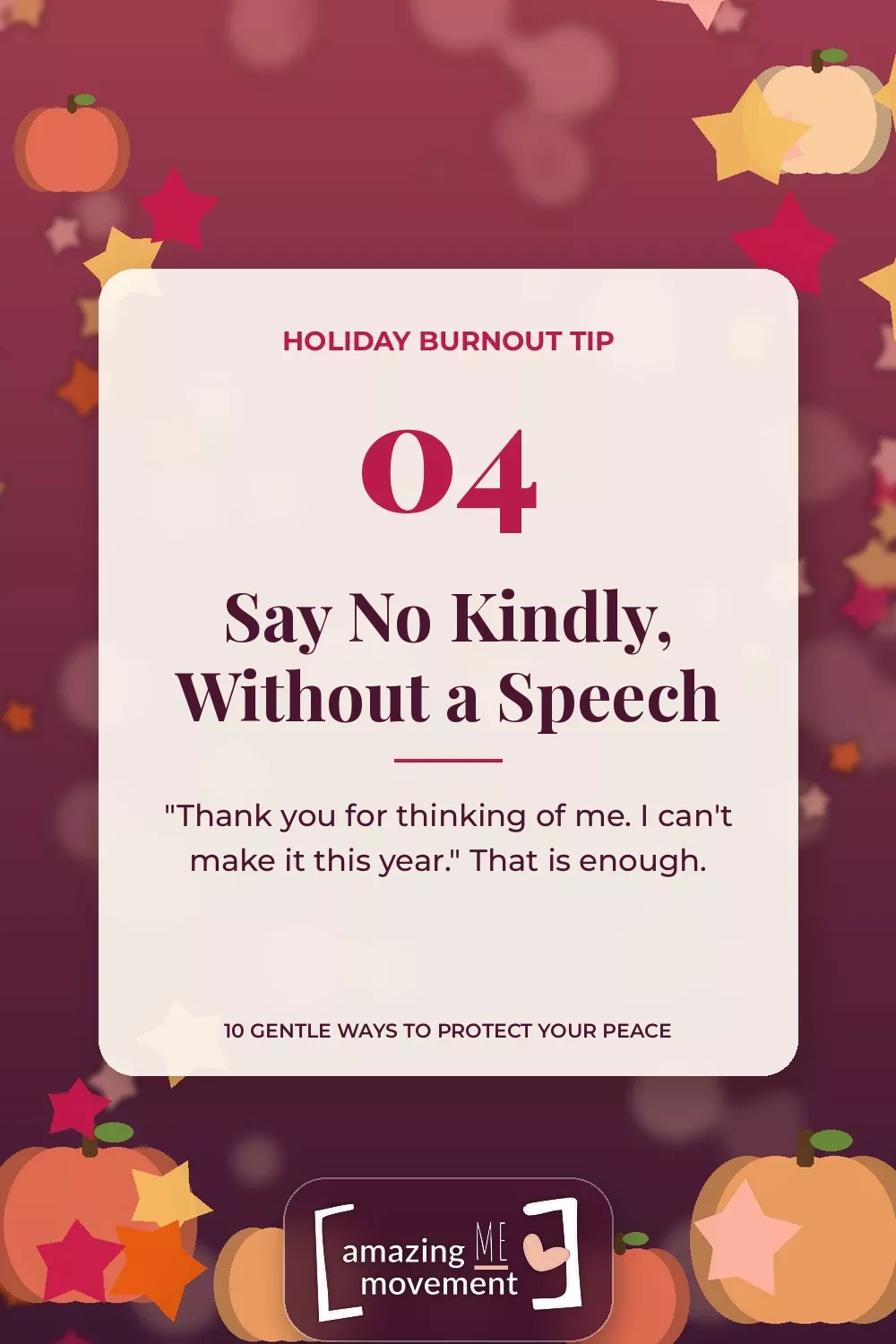
4. Say No Kindly (and Without a Speech)
Every yes you give costs time and energy you could spend somewhere else. Try short, warm scripts like “Thank you for thinking of me, I can’t make it this year” or “I can bring dessert, but I can’t host.” No long explanations needed. If saying no makes your stomach flip, read our guide to the art of saying no. And if family is the tricky part, our step-by-step guide on how to set boundaries with family will help you prepare before you sit down at the table.
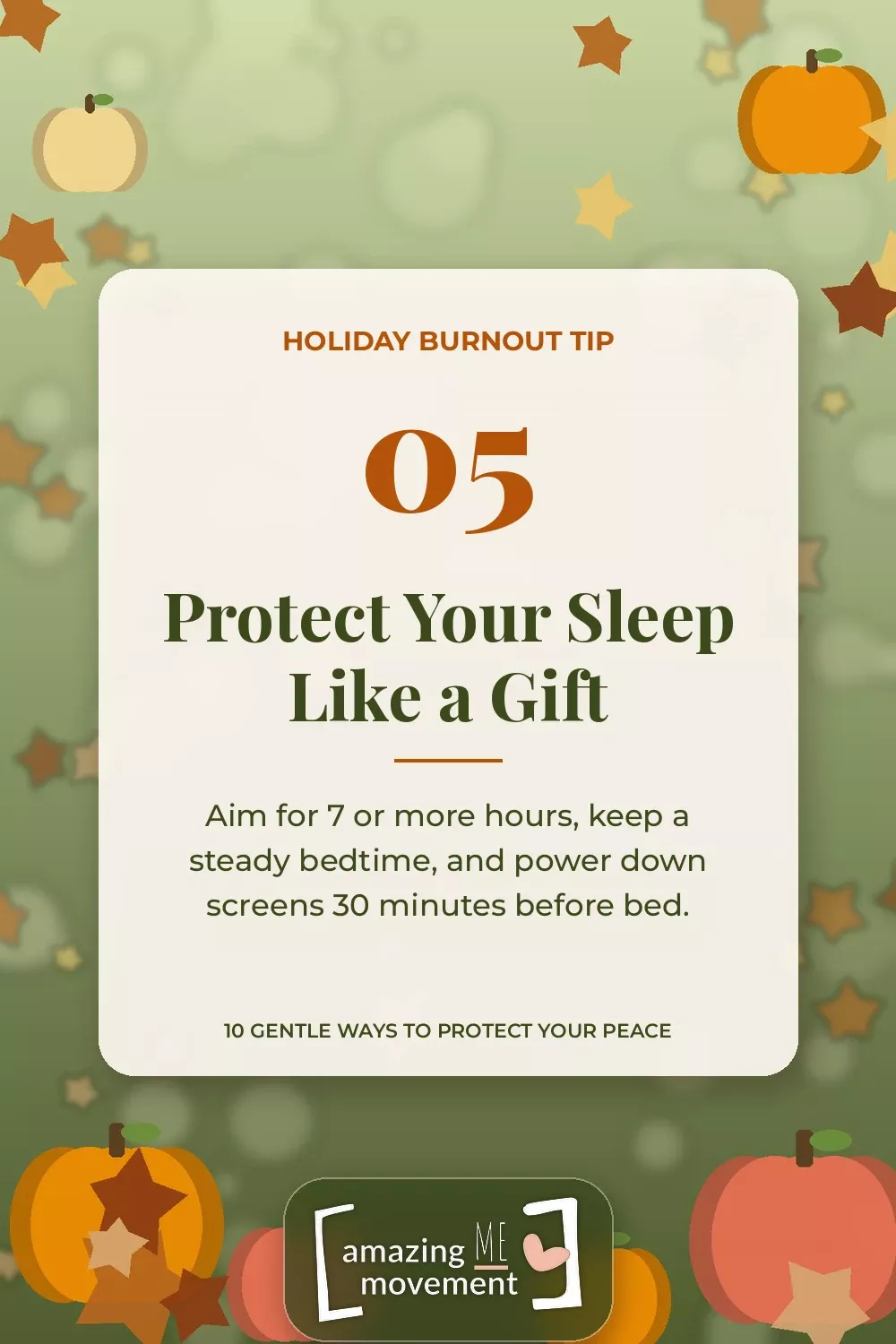
5. Protect Your Sleep Like It Is a Gift
Late night wrapping, early flights, and one more glass of wine can quietly wreck your sleep. The CDC recommends 7 or more hours of sleep a night for adults ages 18 to 60, and notes that enough sleep can help reduce stress and improve your mood. Helpful habits include going to bed and waking up at the same time each day, turning off screens at least 30 minutes before bed, and avoiding large meals and alcohol close to bedtime. Your to do list will still be there in the morning, and you will handle it better rested.
6. Move Your Body in Small Doses
Exercise is usually the first thing to go in a busy season, but it supports both your physical and mental health. The CDC says adults need at least 150 minutes of moderate intensity activity a week, and you don’t have to do it all at once. Ten-minute walks after dinner, a dance break while the turkey rests, or a family stroll on Thanksgiving morning all count. Some movement is better than none.
7. Share the Mental Load Out Loud
Invisible work is still work. Remembering the teacher gift, booking the dog sitter, and knowing who is allergic to nuts all take energy. Write the whole holiday list on paper or in a shared app, then hand out tasks by name. Partners, kids, and guests can peel potatoes, set tables, and pick up rolls. Letting someone do it differently than you would is part of the deal.
8. Talk About How You Really Feel
Here is a surprising finding from the APA poll: 70% of stressed adults said they are comfortable talking with others about their holiday stress, but only 41% actually do. Be part of the 41%. Text a friend, “Honestly, I’m overwhelmed this year,” and she might just reply, “Me too.” Talking it through can make the load feel lighter, and it reminds you that nobody is doing the holidays perfectly.
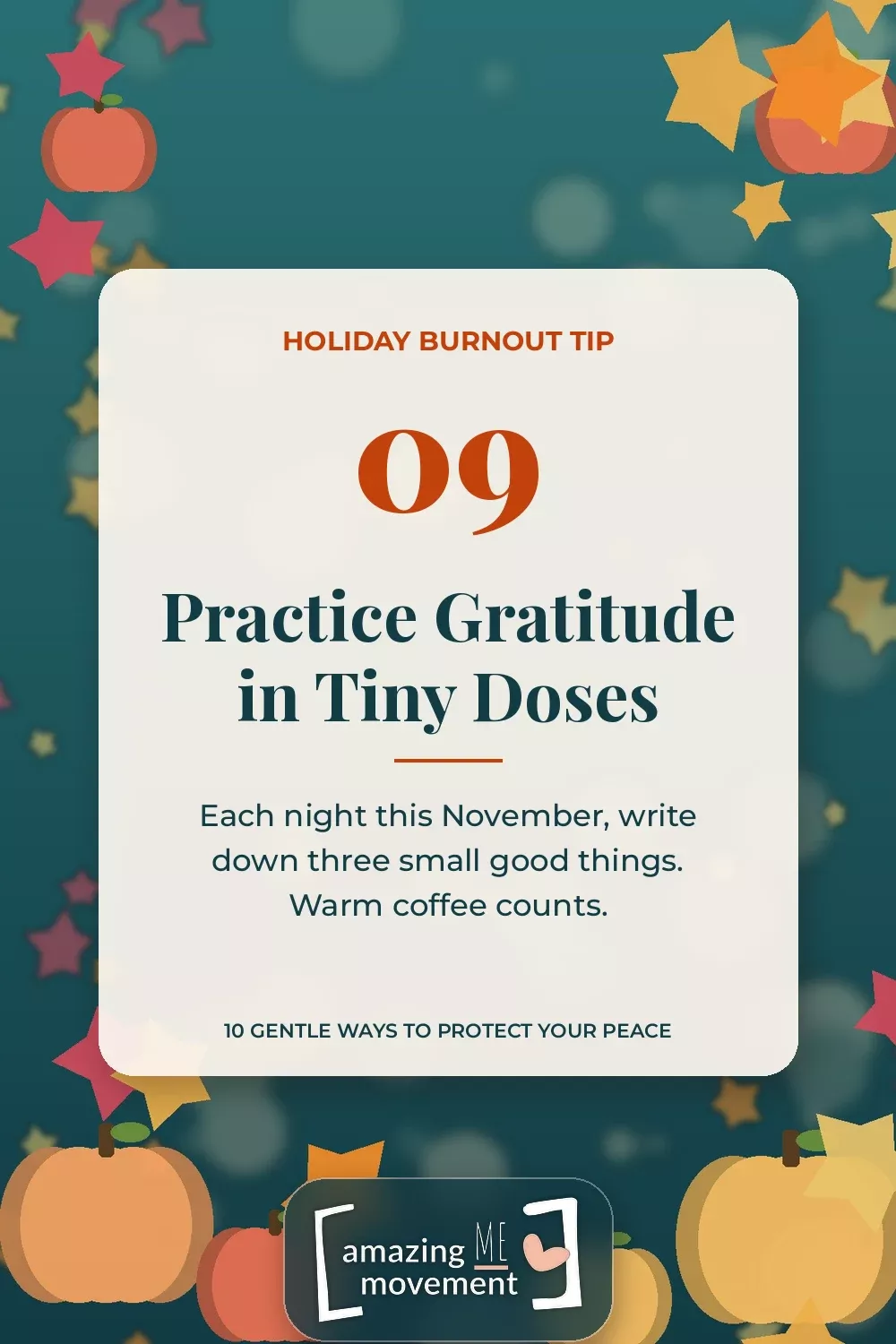
9. Practice Gratitude in Tiny Doses
Thanksgiving is built for this. Harvard Health explains that in positive psychology research, gratitude is strongly and consistently associated with greater happiness. In one well known set of studies, people who kept gratitude lists showed heightened well-being across several, though not all, of the outcome measures compared with other groups. Try writing down three small good things before bed each night in November. Warm coffee counts. So does a coworker who covered for you. Want the science? Read our guide to the benefits of gratitude, or pull a favorite from these November quotes for your journal.
10. Schedule White Space on Purpose
Rest rarely happens by accident in December, so put it on the calendar now. Block one evening a week with nothing planned, and guard it like a meeting with your boss. Light a candle, take a bath, read a few pages, or sit with a warm drink and do absolutely nothing. For ideas, borrow a few of these calming fall rituals. If big gatherings drain you, our holiday season survival guide for introverts has more ways to recharge between events.
Signs You Are Running on Empty
Holiday burnout tends to creep in quietly. Watch for these early warning signs so you can slow down before you hit a wall:
- You feel tired even after a full night of sleep.
- Small things, like a long checkout line, make you snap or cry.
- You are dreading events you would normally enjoy.
- You keep reaching for extra snacks, wine, or scrolling to get through the evening.
- You have stopped doing the things that usually fill you up.
- You feel resentful that everyone else seems to get a holiday except you.
If several of these sound familiar, treat it as information, not failure. It is your cue to cancel one thing, ask for help with another, and rest a little more.
A Simple November Plan to Avoid Holiday Burnout
Want a roadmap? Here is an easy way to spread the work out so it does not all land the week of Thanksgiving:
- Week 1: Pick your three non-negotiables and set your holiday budget.
- Week 2: Send your Thanksgiving plan to family or friends, including who brings what.
- Week 3: Shop for anything that will keep, and block one white space evening in December.
- Thanksgiving week: Delegate, lower the bar, go for a walk, and share one thing you are grateful for.
When to Seek Extra Support
Sometimes it is more than a busy season. The National Institute of Mental Health notes that many people feel down or have the winter blues when the days get shorter in the fall and winter, and that for some people these mood changes are more serious and can affect how they feel, think, and behave. Our honest look at seasonal depression explains more. If low mood, hopelessness, or exhaustion last for weeks or make it hard to get through your day, please talk to your doctor or a licensed mental health professional.
If you are in crisis or thinking about harming yourself, you can call, text, or chat with the 988 Suicide and Crisis Lifeline anytime, day or night, in the United States.
This article is for general information and support. It is not a substitute for professional medical or mental health advice.
Which Gentle Change Will You Try First?
Learning how to avoid holiday burnout is really about giving yourself the same kindness you give everyone else. You are allowed to want a season that feels peaceful, not just productive. You are allowed to skip the extra party, buy the pie, and go to bed early.
So tell us: which of these 10 ideas are you going to try first this November? Share it in the comments, and save one of the cards above to your Pinterest board as a gentle reminder when the season gets loud.

- How to Avoid Holiday Burnout: 10 Gentle Ways to Protect Your Peace – 31/10/2026
- 15 November Quotes for a Grateful, Cozy New Month – 30/10/2026
- 16 Uplifting Quotes to Brighten Your Day – 29/10/2026






Leave a Reply