Category: Self Improvement

  • The Gentle Art of Apologizing Less: A Shame-Free Guide to Quiet Confidence

    The Gentle Art of Apologizing Less: A Shame-Free Guide to Quiet Confidence

    Discover why over-apologizing is a learned habit, not a flaw. Learn three simple boundary practices to replace ‘sorry’ with confidence. A shame-free guide for adults.


  • How to Set Boundaries With Family (Without Guilt)

    How to Set Boundaries With Family (Without Guilt)

    Few relationships test our patience, love, and sense of self quite like family. The people who know us best are often the ones who overstep the most — whether it’s unsolicited advice, guilt trips, or an inability to see you as anything other than the role you played growing up.…

  • Why Am I Constantly Expecting Bad News? The Anticipatory Dread Loop

    Why Am I Constantly Expecting Bad News? The Anticipatory Dread Loop

    Does your stomach drop every time your phone buzzes, even before you know who it is? Do quiet, uneventful days feel less like peace and more like the calm before something goes wrong? If you are constantly expecting bad news, even when there is no clear reason to, you are…

  • How to Break the Trauma Bond: Steps to Get Free for Good

    How to Break the Trauma Bond: Steps to Get Free for Good

    Wanting to leave a relationship and still missing the person intensely at the same time is confusing, and it is one of the clearest signs of a trauma bond. Knowing how to break the trauma bond starts with understanding that this pull is not a sign of weakness or bad…

  • Hyper-Independence as a Trauma Response: Why It Happens

    Hyper-Independence as a Trauma Response: Why It Happens

    Quick Answer: Hyper-independence as a trauma response is an intense, inflexible need to rely solely on yourself—even when support is readily available. It develops when past emotional neglect, betrayal, or inconsistent caregiving teaches your nervous system that depending on others is unsafe. Rather than a simple personality trait, hyper-independence is…

  • Secure Attachment Style: What It Looks Like and How to Build It

    Secure Attachment Style: What It Looks Like and How to Build It

    You do not panic-text. You do not assume the worst from one weird message. You can argue, cool off, and still trust the relationship will be there. That calm, steady feeling is what secure attachment looks like. It is not some relationship superpower. It is simply trusting that closeness is…

  • 7 Law of Attraction Techniques That Actually Work (Backed by Psychology)

    7 Law of Attraction Techniques That Actually Work (Backed by Psychology)

    You’ve said the affirmations, made the vision board, and maybe even talked to the universe before bed. But your dream job, relationship, or bigger bank account still hasn’t shown up. Here is the truth: positive thinking alone is not enough. The law of attraction works best when it helps you…

  • High-Functioning Dissociation: 5 Signs You Are Living on Autopilot

    High-Functioning Dissociation: 5 Signs You Are Living on Autopilot

    Quick answer: High-functioning dissociation is a state in which a person goes through daily life appearing completely normal while feeling emotionally absent, detached, or disconnected from their own experience. Unlike clinical dissociative episodes, it does not interrupt functioning. It hides inside it. Signs include emotional numbness, feeling like an observer…

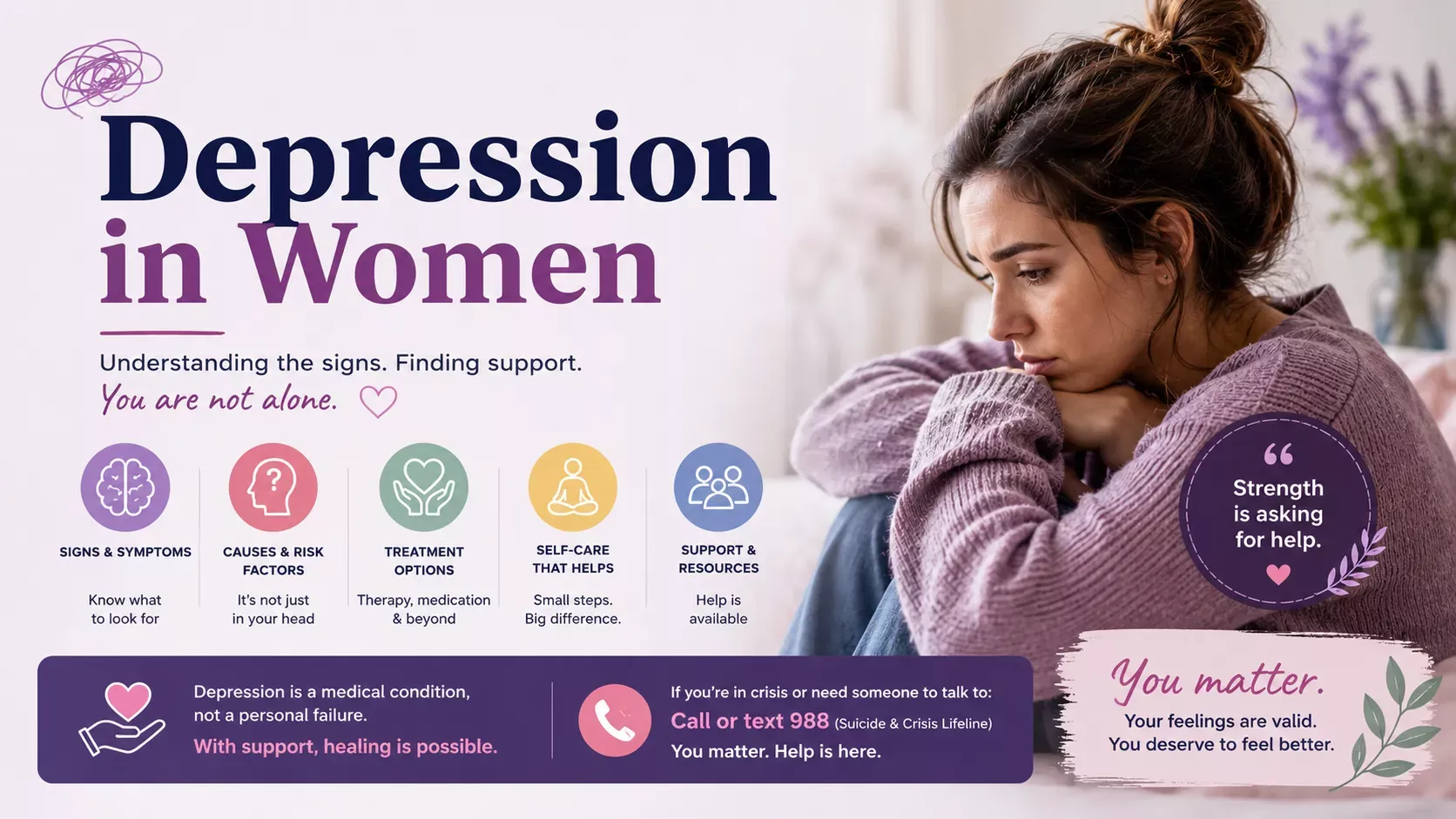
  • Symptoms of Depression in Women That Often Go Unnoticed

    Symptoms of Depression in Women That Often Go Unnoticed

    Depression isn’t always obvious. A woman can smile, go to work, answer messages, and still feel like she’s carrying a heavy weight no one else can see. That’s why it often goes unnoticed. Women are diagnosed with depression almost twice as often as men. Many symptoms get brushed off as…

  • Chronic Stress Symptoms: Physical, Emotional, and Mental Signs

    Chronic Stress Symptoms: Physical, Emotional, and Mental Signs

    Quick answer: Chronic stress symptoms include persistent muscle tension, fatigue that does not improve with rest, sleep disruption, irritability, difficulty concentrating, frequent illness, digestive issues, and a constant low-level sense of being overwhelmed. Unlike acute stress, these symptoms last for weeks or months because the body’s stress response never fully…