

Gaslighting is a slow, silent erosion of the soul. After surviving toxic relationships, you might feel like a stranger to yourself, doubting every thought, feeling, and memory as if your internal compass has been demagnetized.
It is a heavy, disorienting burden to carry, but I want you to know right now: your truth is still in there. This guide is designed to help you navigate the delicate, holy process of rebuilding self-trust from the ground up.
We will explore the mechanics of gaslighting, how to reconnect with your intuition, and gentle somatic practices to calm your weary nervous system.
By the end of this post, you will have a clear, actionable roadmap to reclaim your power and start living with a quiet, steady confidence again.
Why We Lose Ourselves in Toxic Relationships
When you finally exit toxic relationships, the relief is often followed by a terrifying realization: you no longer trust your own mind. Gaslighting is a psychological manipulation tactic used to make a victim question their own reality, memory, or perceptions. Over time, the constant dismissal of your feelings causes you to outsource your reality to someone else just to survive.

To rebuild self-trust is not about never making a mistake again. It is about knowing that even if you do, you are safe with yourself. It is about returning to the core of who you were before the world told you that you were “crazy,” “dramatic,” or “too sensitive.”
Understanding the Mechanics of Gaslighting
To heal, we must first name the ghost. Gaslighting usually follows a predictable pattern of denial and misdirection. The abuser might have used phrases like:
- “That never happened; you’re imagining things.”
- “You’re only remembering it that way because you’re hysterical.”
- “You need help; your memory is failing you.”
When you hear these lies enough, your brain’s survival mechanism begins to prioritize the abuser’s “truth” to keep the peace. This is why you feel so disconnected from your intuition today; you were taught that your intuition was a threat to your safety.
What Is Fear of Abandonment? Signs, Causes, and How to Heal
How to Rebuild Self-Trust
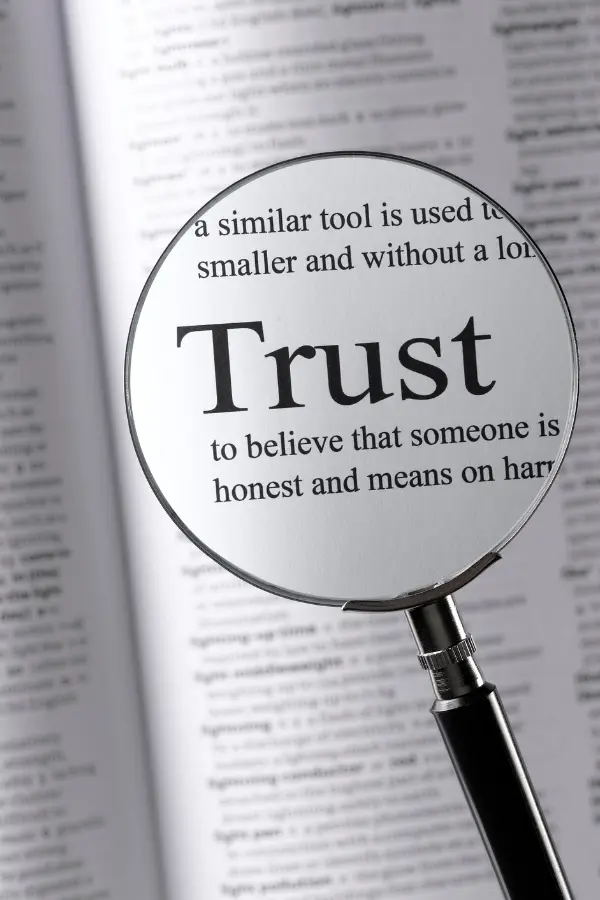
Step 1: Validating Your Lived Experience
The first step to rebuild self-trust is to stop debating your reality with the person who hurt you. You do not need their confession to have your closure. Your memory is not a court case, and you do not need to provide “evidence” for your own pain.
Audit the Narrative
Write down three things you know for a fact happened in those toxic relationships. You don’t need to show this to anyone. This is your “Record of Truth.” When you feel that familiar wave of doubt creeping in, go back to these notes. Seeing the words in your own handwriting acts as a physical anchor to reality when the fog of gaslighting tries to roll back in.
Stop the Second-Guessing Loop
After leaving a toxic environment, you might find yourself asking five different friends for their opinion on a minor decision, like what to wear or what to eat. This is a trauma response. To break it, start with small, low-stakes choices.
- Choose a coffee flavor based on your first instinct.
- Select a book or movie without reading fifty reviews first.
- Pick an outfit that makes you feel comfortable, regardless of trends.
- Notice how it feels to let your preference be the final word.
Step 2: The Role of the Nervous System in Reclaiming Peace
We often think of trust as a mental concept, but it is deeply physical. Your body was likely the first thing to know that something was wrong in your toxic relationships. Perhaps you felt a knot in your stomach or a sudden fatigue when their name popped up on your phone.
Moving Out of Freeze Mode
If you were a victim of prolonged gaslighting, your nervous system may be stuck in a “freeze” or “fawn” state. This makes decision-making feel impossible because your body feels fundamentally unsafe.
- Focus on sensory grounding: name five things you can see and four things you can touch.
- Use vocal toning: gently humming or sighing to stimulate the vagus nerve.
- Practice gentle movement: swaying or stretching to release stagnant energy.
- Incorporate deep breathing: exhaling longer than you inhale to signal safety.
Why Your Body Remembers
Your intuition is often just your nervous system processing patterns before your conscious mind can. When you rebuild self-trust, you are essentially telling your body, “I am finally listening to you. I won’t ignore your signals anymore.”
Step 3: Deconstructing the Toxic Inner Critic
The voice of a person who used gaslighting against you often becomes your internal monologue long after the relationship ends. You might catch yourself thinking, “I’m being too sensitive” or “I probably overreacted.” These are not your thoughts; they are echoes of the abuse.
Cognitive Reframing: Whose Voice is This?
When a self-doubting thought arises, try to identify its origin. If the voice is harsh, mocking, or dismissive, it likely belongs to the toxic person. If the voice is curious, gentle, or protective, it is your True Self. Recognizing this distinction is a major milestone in your journey to rebuild self-trust.
Practice Self-Compassion Over Perfection
You will have “bad” days where the old voices feel loud. You will occasionally fall back into old patterns of self-doubt. Toxic relationships are not unlearned in a weekend. Be as patient with yourself as you would be with a child learning to walk for the first time. Healing is a spiral, not a straight line.
Step 4: Boundaries as an Act of Sacred Self-Trust
You cannot rebuild self-trust if you continue to allow people into your space who treat your reality as a debate. Boundaries are the walls that protect your healing.
Radical Honesty with Yourself
Self-trust requires you to stop gaslighting yourself. If you are tired, admit you are tired. If you are hurt, acknowledge the sting. When you honor your internal state, you prove to your soul that you are a reliable narrator of your own life.
- Acknowledge your hunger the moment you feel it.
- Validate your anger rather than pushing it down.
- Admit when you feel uncomfortable in a social setting.
- Honor your need for silence when the world gets too loud.
The Power of the No
Start saying “no” to things that don’t feel like a “hell yes.” Each time you set a boundary, you are casting a vote for your own worth. You are proving to yourself that your needs are valid and that you have the power to protect them. This is the cornerstone of moving away from toxic relationships.
Step 5: Forgiving the Version of You That Stayed
A major hurdle in the quest to rebuild self-trust is the deep shame we feel for not leaving toxic relationships sooner. You might think, “How can I trust myself if I let that happen for so long?”
The Wisdom of Survival
You stayed because you were trying to survive. You stayed because you are a person who believes in love, loyalty, and the beauty of human potential. Those are not flaws; they are your strengths. The abuser simply took advantage of your light. Forgiving yourself for your survival choices is the ultimate act of reclaiming your power.
Integrating Your New Reality
Healing from gaslighting is a brave and radical act. As you move forward, remember that your intuition is like a muscle. It might be weak right now from disuse, but with every small decision you make and every boundary you set, it gets stronger. You are not “broken” beyond repair; you are in a process of beautiful, intentional renovation.
Love Bombing vs Real Love: The Signs Most People Miss
You Are the Ultimate Authority of Your Life

Rebuilding your life after toxic relationships requires you to sit with the discomfort of uncertainty while you slowly learn to tune back into your own frequency. Remember that gaslighting was designed to make you feel small, but you have always been whole. The path to rebuild self-trust is paved with small, gentle moments of self-honesty and the courage to say, “I know what I saw, I know what I felt, and my truth is enough.”
You have survived the storm. Now, it is time to learn how to sunbathe again. Trust that the wisdom you need is already within you, waiting for the noise to quiet down so it can finally be heard.
Are you ready to take the first step in your healing journey? Start by honoring one small feeling today. Whether it’s a need for rest or a boundary that needs setting, listen to that inner nudge. You are worth the effort.
Explore more reflections, encouragement, and self-growth content on Amazing Me Movement, and continue choosing yourself, one gentle moment at a time.
Feeling Burnt Out? 7 Shocking Ways to Get Your Spark Back
The Power of Slow Progress: Why Lasting Growth Takes Time
Lessons from Bieberchella: The Emotional Side of Justin Bieber at Coachella
9 Ways to Keep Going When You’re Emotionally Exhausted
Frequently Asked Questions
How do I rebuild trust in myself?
To rebuild self-trust, start by making and keeping small promises to yourself. This could be as simple as drinking more water or committing to a five-minute morning stretch. When you prove to your brain that you are dependable in small ways, you create a foundation for trusting your bigger instincts again.
What are signs of a toxic relationship?
Common signs of toxic relationships include a constant feeling of “walking on eggshells,” a lack of support for your personal growth, and a pattern of disrespect or manipulation. If you feel drained, small, or consistently misunderstood, your relationship may be impacting your mental well-being.
What do gaslighters say in a relationship?
Those who use gaslighting often use phrases like “You’re too sensitive,” “I never said that,” or “You’re remembering things wrong.” The goal of these statements is to make you doubt your own perceptions so they can maintain control over the narrative of the relationship.
What are the signs of gaslighting?
Key signs of gaslighting include feeling confused about your own reality, constantly apologizing for things you didn’t do, and feeling like you can’t do anything right. You may also find yourself lying to friends or family to avoid explaining your partner’s behavior.
Do toxic people know they are toxic?
Not always. While some people consciously use manipulation, many toxic individuals are reacting out of their own unhealed trauma or defense mechanisms. However, a lack of awareness does not excuse the harm caused, and your primary responsibility is to protect your own peace and safety.








Leave a Reply