You know that weird feeling when you apologize even though you did nothing wrong? Or when one conversation with her can live in your head for hours? That can happen when you grow up with a narcissistic mother….
This is not just “a mom who had a bad day” or was a little self-centered. It is a pattern where her needs always come first, and everyone else learns to tiptoe around her like they are walking on eggshells.
Below are the most common signs of a narcissistic mother, how they can shape daughters and sons for years, and where to begin if you are ready to stop letting her control your life.
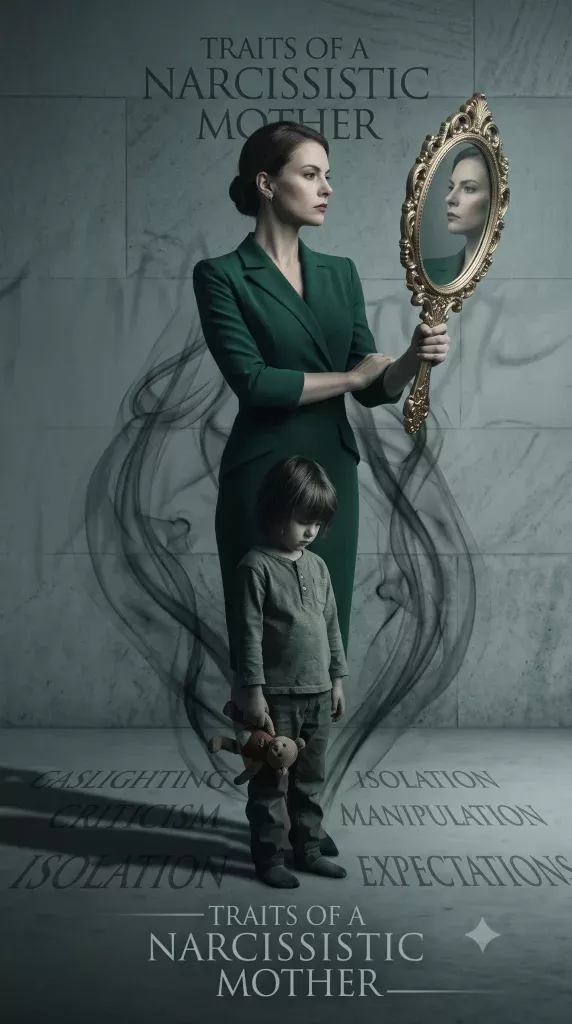
What Does It Mean to Have a Narcissistic Mother?
A narcissistic mother isn’t necessarily someone with a clinical diagnosis of narcissistic personality disorder (NPD), though some do meet that criteria.
More often, she’s a parent with strong narcissistic traits: a need for constant admiration, a shallow well of empathy, and a habit of treating her children as extensions of herself rather than separate people with their own feelings.
She might look completely different from the stereotype of an obviously self-obsessed diva. Plenty of narcissistic mothers present as devoted, even martyr-like, to the outside world. The dysfunction lives in private, in the moments where love comes with strings attached.
Common Traits of a Narcissistic Mother
She Makes Everything About Her
Your win, your pain, your big day, your worst day. Somehow it all turns into her story. You graduate, and somehow it becomes about her “sacrifices.”
You get bad news, and she makes it about how hard it is for her. It’s like every moment has to pass through her first.
She Withholds Love as Punishment
With her, love can feel like a prize you have to earn. Say the wrong thing, disagree, or just have a rough day, and suddenly the warmth disappears.
That kind of love teaches kids a terrible lesson: “Be perfect, or lose the affection.”
She Can’t Tolerate Criticism
Try telling her she hurt you, and the whole conversation flips. Now you are “too sensitive,” “too dramatic,” or “making things up.”
She does not want to hear that she messed up, because in her mind, she is never the problem.
She Plays Favorites
In some families, one child becomes the golden child and another gets stuck as the scapegoat. The roles can change whenever she feels like it, which keeps everyone chasing her approval like it is the last slice of pizza.
She Uses Guilt as a Steering Wheel
“After everything I’ve done for you” is her favorite move. Guilt is her secret weapon because it is quiet, sneaky, and effective. Even grown adults can feel bad for something as small as not calling back fast enough.
She Invades Your Privacy
She reads your messages, shows up without warning, or tells other people things that were never hers to share. A narcissistic mother often acts like your life belongs to her, too. It does not.
She Needs an Audience
Around other people, she may look sweet, caring, and totally normal. But behind closed doors, the mask can drop fast.
That is what makes it so confusing — everyone else thinks she is amazing, while you are left wondering if you are the crazy one. You are not.
She Competes With You
Your success should be easy to celebrate. With her, it becomes a contest. You get a promotion, and she has to mention hers from ten years ago.
You buy something nice, and she suddenly has one that is “better.” Instead of cheering for you, she tries to outshine you.
How Growing Up With a Narcissistic Mother Affects You Later
The traits above don’t stay contained to childhood.
A 2023 study referenced by psychologists at The Center: A Place of HOPE found that adults who described their primary caregiver as narcissistic reported markedly higher rates of depression and low self-esteem than those who didn’t.
That tracks with what shows up in therapy rooms constantly.
Chronic People-Pleasing
If love was conditional growing up, pleasing people becomes a survival skill in adulthood.
Many daughters of narcissistic mothers struggle to say no, even when a request is unreasonable, because saying no once meant losing approval entirely.
Difficulty Trusting Your Own Perception
Years of having your feelings dismissed or twisted back on you (a pattern often called gaslighting) can leave you doubting your own read on situations, long after you’ve moved out and moved on.
An Internal Critic That Sounds a Lot Like Her
Perfectionism is common among adult children of narcissistic parents, not because they’re chasing excellence for its own sake, but because mistakes used to invite real consequences.
Trouble With Boundaries in Other Relationships
If your mother never respected your limits, you may not have a clear sense of what a limit even feels like — which can lead to overextending yourself with partners, friends, and coworkers.
Anxiety Around Conflict
Disagreeing with someone can trigger the same bracing feeling you had as a kid, waiting to see which version of your mother would show up.
That doesn’t mean you’re overreacting; it means your nervous system learned its lessons well.
How to Start Healing From a Narcissistic Mother
Healing is not about finally winning the argument or getting the apology you should have gotten a long time ago. Most of the time, that apology never comes.
The real work is rebuilding your relationship with yourself after someone spent years messing with it.
Name What Happened.
Start by calling it what it is. When you stop saying, “She just had a hard life,” and start saying, “That hurt me,” things finally begin to make sense.
Get Support.
A good therapist or a support group can feel like finding a flashlight in a dark room. They help you see that you were not “too much” — you were just carrying too much.
Practice boundaries.
Boundaries are like training wheels for your nervous system. Saying no to a classmate, a coworker, or a friend can make it a little easier to say no at home too.
Decide what kind of contact works for you.
Some people keep things limited and careful. Some go low-contact. Some walk away completely. There is no perfect answer here — only the one that keeps your peace from getting wrecked.
Grieve the mother you needed.
This part hurts, but it matters. You are not just grieving the mom you had. You are grieving the mom you should have had — the safe, kind, steady one who showed up and made you feel loved.
If you’re looking for further reading, these books on healing from narcissistic abuse are a solid place to start, and learning the art of setting boundaries can help you practice saying no without the guilt spiral that usually follows.
FAQ
Can a narcissistic mother change?
It can happen, but it’s rare. Real change takes honest self-reflection and years of effort. Your healing should never depend on waiting for her to become a different person.
Is it normal to feel guilty for going low-contact?
Yes. That guilt is usually something you were taught, not proof you’re making the wrong choice. It gets easier with time and support.
What’s the difference between a narcissistic mother and one who’s just difficult?
Everyone has bad days. A narcissistic mother follows the same pattern over and over: her needs come first, your feelings come second, and taking responsibility is rare.
Do sons experience the same effects as daughters?
Yes. Sons can struggle with people-pleasing, anxiety, and weak boundaries too. The details may look different, but the emotional scars are often just as real.
Should I confront my narcissistic mother?
Ask yourself why you’re doing it. If you’re hoping for an apology, you may end up disappointed. If you’re speaking up to find your own peace, it can still be worth it.
Moving Forward
Recognizing the traits of a narcissistic mother isn’t about assigning blame for sport. It’s about finally having language for something you may have sensed your whole life but couldn’t quite name.
That clarity is where the real work — the work of building a life and a sense of self that belong entirely to you — actually begins.

- How to Cope With Grief and Loss: A Compassionate Guide – 10/08/2026
- Love Bombing: Signs, Stages, and What to Do – 03/08/2026
- Signs of Anxiety Disorder in Adults You Shouldn’t Ignore – 29/07/2026







Leave a Reply