
Love can feel like a wildfire, intense, all-consuming, and impossible to ignore.
But sometimes what we think is love is actually something more complicated: a cycle of emotional highs and lows that keeps us trapped in pain.
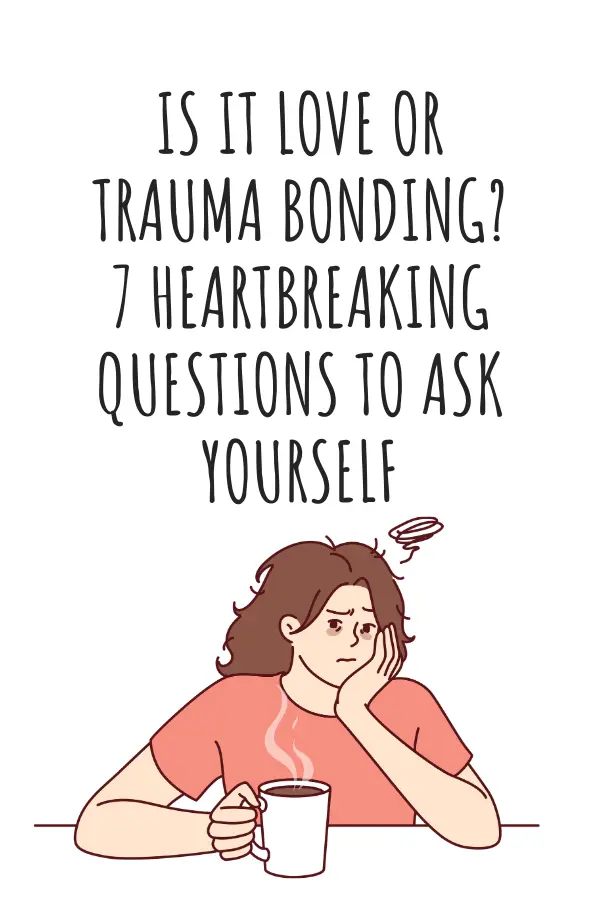
This article will guide you through seven heartbreaking questions that can help you see your relationship clearly, understand your feelings, and gently reclaim your emotional well-being.
7 Questions to Know If It’s Love or Trauma Bonding
1. Do I Feel Peace or Constant Anxiety Around Them?
One of the simplest ways to tell if your attachment is love or trauma bonding is to notice how you feel around the other person. Love should feel steady and safe, even during disagreements.
Trauma bonding, however, often keeps you on edge, waiting for the next emotional swing or conflict.

You might notice your heart racing during small disagreements, or you may find yourself anticipating rejection or disappointment before it even happens.
Ask yourself:
- Are your conversations calming or draining?
- Do you feel like you have to brace yourself emotionally most of the time?
- Do small conflicts leave you shaken for hours or days?
If you find that your emotional state is constantly reactive rather than balanced, it may not be love.
2. Am I Staying Because of Love or Fear?
It can be heartbreaking to admit, but many people stay in relationships for reasons other than love.
Trauma bonding often creates a sense of fear, guilt, or dependency that keeps you tethered to someone, even when the relationship is harmful.
Love, by contrast, is a choice you make freely, not a response to fear or insecurity.
Consider:
- Are you drawn to this person because of who they are now or because you fear being alone?
- Are you hoping they will change or become the person you want them to be?
- Do you feel trapped by the idea of loss?
Understanding your motivation for staying is crucial for recognizing the difference between love and trauma bonding.
How to Find the Courage to Leave a Relationship That’s Breaking You
3. Can I Express My Needs Without Guilt?
Healthy love encourages open, honest communication. It allows you to express your feelings, desires, and boundaries without fear of judgment or reprisal.
Trauma bonding, on the other hand, often teaches self-sacrifice and silence, conditioning you to hide your needs to avoid conflict, anger, or withdrawal.
Ask yourself:
- Can you voice your feelings without being dismissed or punished?
- Do you hide your needs to avoid conflict?
- Are your boundaries consistently respected?
If you feel unsafe sharing your thoughts or needs, it is a strong sign that the relationship may be rooted in trauma bonding rather than love.
4. Does This Relationship Help Me Grow or Keep Me Stuck?
Love should be a force that encourages personal growth and self-discovery.

Trauma bonding often keeps you trapped in repeated cycles of emotional pain, preventing healing and growth.
Ask yourself if your relationship challenges you in positive ways or simply mirrors old patterns of hurt and longing.
Reflect on these points:
- Are you learning, healing, and growing as a person?
- Does the relationship motivate you toward positive change or pull you back into fear and doubt?
- Are old wounds being reopened instead of gently processed?
A healthy relationship supports your development, while a trauma bond often anchors you in stagnation and emotional turbulence.
5. Am I Attached to Who They Are or Who I Hope They Will Become?
It is easy to become attached not to a person as they are but to the version you hope they will be.
Trauma bonds frequently rely on potential, promises, or imagined change, keeping you invested in what might be instead of what actually exists.
Love, however, accepts the present reality of someone and nurtures a connection rooted in truth rather than hope.
Ask yourself:
- Am I loving them as they are or as I wish they were?
- Am I ignoring red flags because I believe in a future version of them?
If most of your attachment is based on hopes and expectations, it may indicate trauma bonding rather than genuine love.
6. Do I Feel Emotionally Independent or Dependent?
Love allows emotional independence. You can feel whole on your own while enjoying the connection with your partner.
Trauma bonding, however, often fosters emotional dependence, where your mood, self-worth, or sense of stability feels controlled by the other person.
Consider:
- Can you enjoy life even when they are upset or unavailable?
- Do you feel whole alone or constantly need their attention and approval?
- Are your emotions often reactive to theirs rather than grounded in your own sense of self?
Acknowledging your emotional reliance can help you determine whether your attachment is healthy or harmful.
10 Key Differences Between Successful and Unsuccessful People
7. If Nothing Changed, Would I Still Choose This Relationship?
The final question is simple but profound. Love exists in the present moment.
Trauma bonding often depends on hope that things will change.

Being honest about whether you would choose the relationship as it is can reveal the truth.
Ask yourself:
- If their behavior stayed exactly the same, would you willingly stay?
- Are you attached to comfort or familiarity rather than a healthy connection?
- Are you hoping for change instead of accepting reality?
If the answer is no, it is likely a trauma bond rather than love.
Healing and Moving Forward
Recognizing trauma bonding is not easy. It can feel like losing love itself, yet clarity is empowering. Here are some steps to begin healing:
- Set gentle boundaries: Protect your emotional space in ways that feel safe
- Seek support: Friends, therapists, or support groups can provide perspective and safety
- Journal your feelings: Writing helps distinguish between healthy attachment and trauma bonding
- Practice self-compassion: Be gentle with yourself for staying in difficult situations
- Focus on personal growth: Reconnect with hobbies, passions, and values outside the relationship
Each step you take is a move toward understanding your heart and reclaiming your emotional freedom.
Understanding Trauma Bonding and Why It Feels Like Love
Trauma bonding happens when we form deep emotional attachments through patterns of emotional pain followed by intermittent affection.
The intensity of these cycles can feel like love because they trigger powerful feelings of attachment, longing, and hope.
What makes trauma bonding different from real love is that it often leaves you feeling drained, anxious, and dependent, instead of supported and nourished.
True love, on the other hand, helps you grow, encourages your independence, and fosters emotional safety.
Recognizing these patterns can feel painful, but clarity is the first step toward self-healing and healthy relationships.
Conclusion
Love and trauma bonding can feel very similar, especially when our hearts are deeply invested. Asking these seven heartbreaking questions can help you distinguish between true love and harmful attachment, guiding you toward relationships that nurture your growth and emotional well-being.
You deserve love that lifts you up, not a bond that keeps you trapped. Start by paying attention to your feelings, honoring your boundaries, and choosing yourself.
Reflect on these questions, journal your answers, and take one gentle step toward healthier relationships and self-understanding.
Explore more reflections, encouragement, and self-growth content on Amazing Me Movement, and continue choosing yourself, one gentle moment at a time.
- 2026 Is the New 2016: How Looking Back Can Help You Move Forward
- 7-Day Positive Affirmation Challenge: Daily Practices to Be Your Best Self
- 5 Questions to Ask Yourself Before You Start Dating Again
- 9 Beliefs That Steal Your Peace (And How to Let Them Go)
Frequently Asked Questions (FAQs)
1. How do I know if it is trauma bonding or love?
Look at the patterns. Trauma bonding involves emotional highs and lows, fear of loss, and dependency, while love provides stability, mutual respect, and emotional growth.
2. Can trauma bonding happen in long-term relationships?
Yes. Trauma bonds can persist for years, especially when cycles of affection and withdrawal continue over time.
3. Is it possible to turn a trauma bond into a healthy relationship?
It is challenging. Both parties need self-awareness, therapy, and a willingness to break harmful patterns. Healing often requires temporary or permanent separation.
4. What are the first steps to heal from trauma bonding?
Set boundaries, seek support, journal your emotions, and focus on self-compassion. Recognizing the bond is the most crucial first step.
5. How can I prevent future trauma bonds?
Learn to recognize red flags early, prioritize emotional independence, and trust your instincts about whether a relationship feels safe and nurturing.








Leave a Reply