It usually starts with a scroll. A friend’s Thanksgiving table looks like a magazine spread. A coworker just booked a cabin for the long weekend. Your cousin’s kids are wearing matching sweaters, and nobody is crying. Then you look at your own kitchen, your own budget and your own slightly lopsided pie, and a quiet little voice says: everyone else is doing this better. Learning to stop comparing yourself to others starts with noticing that voice.
If that sounds familiar this holiday season, you are far from alone, and there is nothing wrong with you. Comparison is one of the most human habits there is. The good news is that it can be gentled, redirected and even turned into something useful. With Thanksgiving on Thursday, November 26, here are 10 kind, research-backed ways to quiet the comparison voice and feel like enough, exactly as you are.
Why Comparison Gets Louder During the Holidays
The holidays are practically designed for measuring. In a 2023 American Psychological Association poll, 36% of U.S. adults said the holidays feel like a competition, and 43% said holiday stress interferes with their ability to enjoy the season. Add a feed full of perfectly lit dinner tables, and it is no wonder so many of us end the day feeling behind.
Psychologists have studied this for a long time. Back in 1954, social psychologist Leon Festinger proposed that people evaluate their views and abilities by comparing themselves with others, especially when there is no objective yardstick, an idea summarized in a well-known 1997 paper by Sonja Lyubomirsky and Lee Ross. That same paper notes that daily conversations and the media keep us supplied with news of how other people live and what they achieve, and that comparing often seems to happen almost on its own. In other words, the urge to compare is not a character flaw. It is a reflex. And reflexes can be retrained.
What the Research Says About Comparison and Happiness
Here is the hopeful part. In two studies, Lyubomirsky and Ross found that students who rated themselves as unhappy were heavily affected by a peer who did better or worse than them, while happy students were affected mainly when a peer did worse. Happier people, in other words, seem to let other people’s wins sting a little less. The goal is not to never notice anyone else. It is to stop handing your mood over to everyone else’s highlight reel.
Social media makes that harder. In an experiment described by Penn Today, psychologist Melissa G. Hunt randomly assigned 143 college students either to keep their usual habits or to cap their time on Facebook, Snapchat and Instagram at 10 minutes a day on each app for three weeks. “Using less social media than you normally would leads to significant decreases in both depression and loneliness,” Hunt said. Her explanation will sound familiar: “When you look at other people’s lives, particularly on Instagram, it’s easy to conclude that everyone else’s life is cooler or better than yours.” The study looked only at undergraduates and three platforms, so it is not the final word, but it is a useful nudge.
10 Gentle Ways to Stop Comparing Yourself to Others This Holiday Season
You do not need all ten. Pick the two or three that feel most doable this week, and let the rest wait.
1. Catch the Comparison Moment
You cannot change a habit you do not see. For the next few days, simply notice when comparison shows up. Is it while scrolling in bed? When a certain relative talks about her kitchen remodel? Name it softly in your head: “There is the comparison voice again.” Naming a thought creates a little space between you and it, and in that space you get to choose what happens next.
2. Remember You Are Seeing a Highlight Reel
That glowing table photo does not show the burnt rolls, the argument about parking or the host who cried in the pantry. When you compare your everyday life to someone else’s best moment, you will lose every time. Next time a post stings, remind yourself: “I am seeing one chosen second of their story.” If you are already running low, our guide to avoiding holiday burnout can help you protect your energy before the big week.
3. Set a Gentle Scroll Limit for Thanksgiving Week
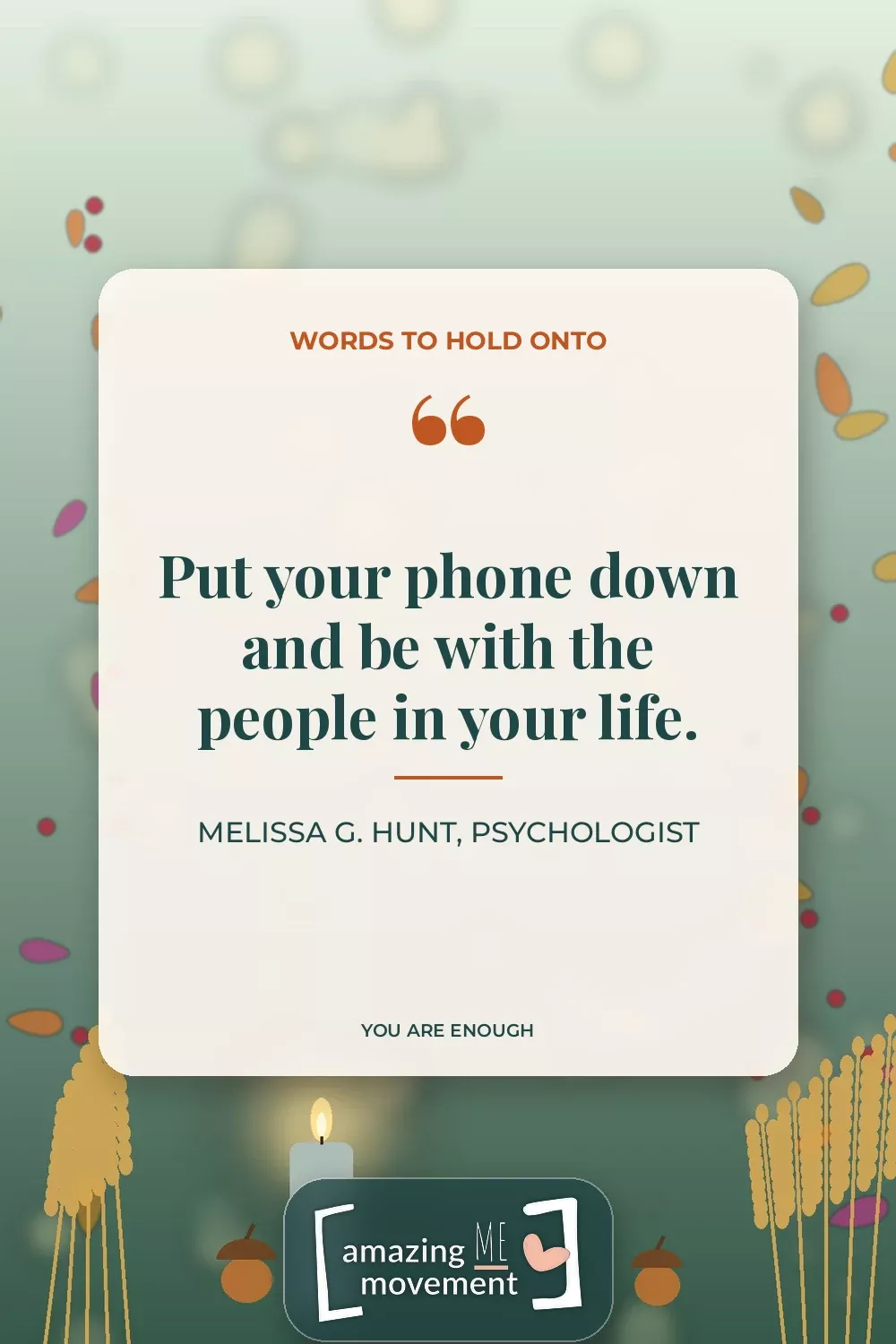
Hunt’s advice from the Penn study is refreshingly simple: reduce opportunities for social comparison. “In general, I would say, put your phone down and be with the people in your life,” she told Penn Today. Try a timer on your favorite apps, keep your phone in another room during dinner or mute accounts that leave you feeling small. If you want a bigger reset, a short social media detox over the long weekend can feel like opening a window.
4. Turn Envy Into Information
Envy is uncomfortable, but it can also be a compass. When you feel a pang, get curious instead of critical. Do you actually want a bigger house, or do you want more calm evenings at home? Do you want her career, or do you miss feeling proud of your work? Write down what the envy is pointing to, then pick one small, realistic step toward that value. A pang becomes a plan.
5. Practice Gratitude on Purpose
Gratitude may be the most natural antidote to comparison, and this is the perfect week for it. Writing for Greater Good Magazine, Dacher Keltner and Jason Marsh describe research linking stronger materialism with notably lower gratitude, plus a 2009 study in which prompting people to feel grateful made them less materialistic. Each night this week, jot down three things you already have that you would hate to lose. Want to go deeper? Our step-by-step guide to writing a gratitude letter turns thankfulness into a gift.
6. Trade One Comparison for One Thank You
Here is a playful Thanksgiving table rule: every time you catch yourself comparing, say one thank you out loud instead. Thank your sister for the green bean casserole. Thank your partner for doing the dishes. Thank yourself for showing up. It interrupts the comparison spiral and puts attention back on the real people in the room, which is where the good stuff is anyway.
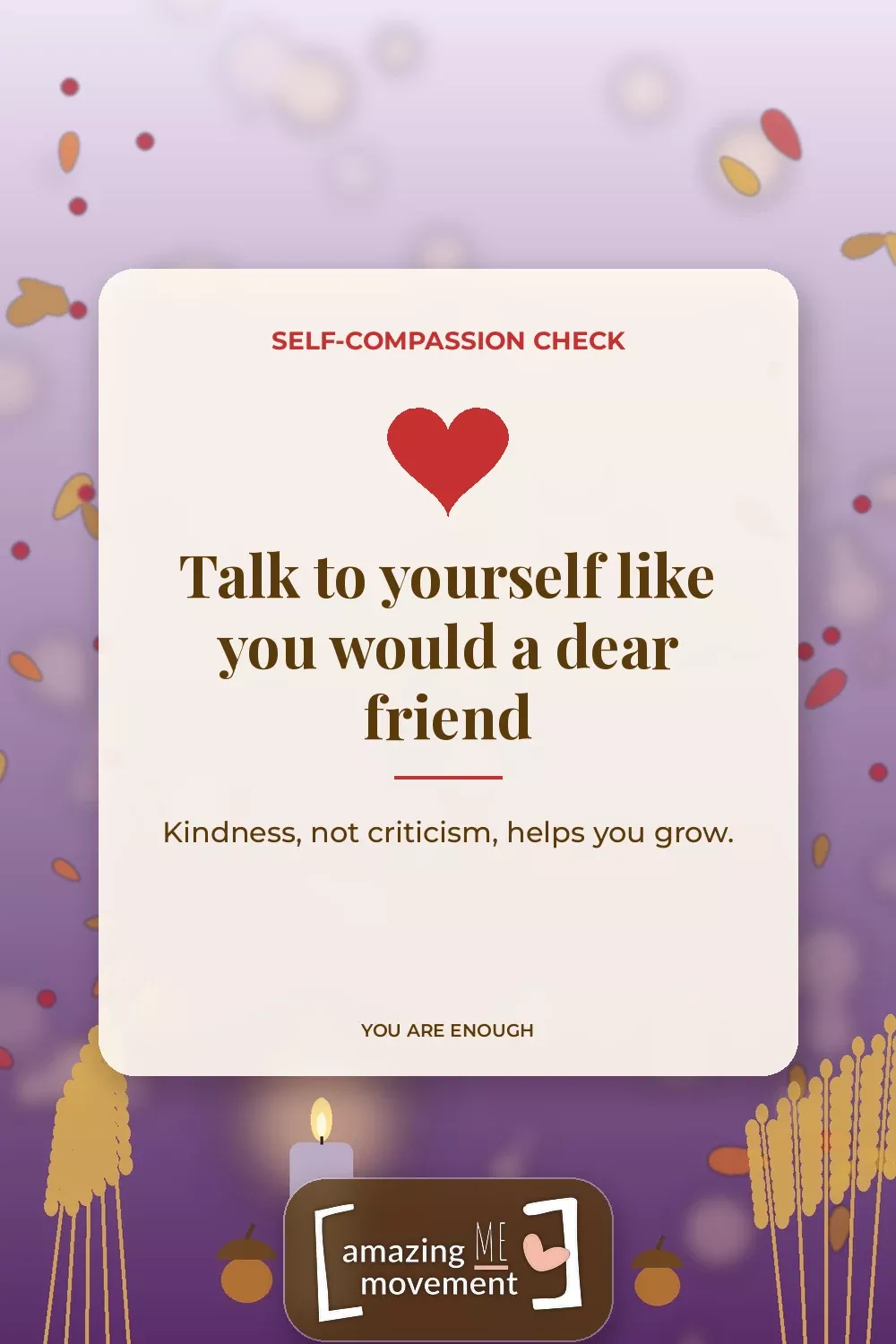
7. Talk to Yourself Like a Dear Friend
When a friend feels behind, you would never say, “Well, everyone else is doing better.” Self-compassion researcher Kristin Neff describes self-compassion as treating yourself with the kindness you would offer a friend who is having a hard time or feeling down on themselves. And it seems to help with comparison specifically: in a study of more than 2,000 people, Neff and Roos Vonk found that self-compassion was more strongly linked to less social comparison than global self-esteem was, and it predicted steadier feelings of self-worth. Try a simple script: “This is hard right now. Lots of people feel this way. I am doing my best.”
8. Compare Yourself to Who You Were Last Year
If you are going to measure, use a fairer ruler. Think back to last November. What have you learned, healed, survived or started since then? Maybe you set a boundary that once felt impossible, or you finally asked for help. That is real progress, and it belongs to you. For a confidence lift, our guide to ways to build self-confidence is full of small, practical steps.
9. Choose Moments Over Matching Sweaters
A lot of holiday comparison is about stuff: the décor, the gifts, the perfect outfit. Research points somewhere else. Psychologist Leaf Van Boven, describing his work with Thomas Gilovich to CU Boulder Today, said: “We found that people receive more enduring pleasure and satisfaction from investing in life experiences than material possessions.” He added that experiences “tend to be associated more with deeper personal meanings than possessions.” So instead of trying to match anyone’s Pinterest board, plan one simple experience you will love: a walk after dinner, a board game or a cozy movie night. Our tips on how to savor the holidays can help you soak it in.
10. Protect Your Peace With Kind Boundaries
Sometimes comparison comes from other people. The aunt who asks why you are still single, or the friend who always mentions her raise. You are allowed to change the subject, step outside for air or keep your answers short and warm. Our gentle scripts for setting holiday boundaries without guilt make those moments much easier, and a few calming Thanksgiving affirmations in your pocket can help you stay grounded.
A Quick Comparison Reset You Can Do Anywhere
- Pause: notice the comparison thought and name it.
- Breathe: take three slow breaths before you react or scroll on.
- Reframe: remind yourself you are seeing one moment of someone’s story.
- Return: name one thing you are grateful for right where you are.
When Comparison Feels Like Something More
Comparison is common, but sometimes it is a symptom of something heavier. The National Institute of Mental Health notes that everyone feels sad or low sometimes, but those feelings usually pass, while depression is different and can change how you feel, think and get through daily life. If you constantly feel worthless, have lost interest in things you used to enjoy or the heaviness is not lifting, please reach out to your doctor or a licensed mental health professional. If you are in crisis or thinking about suicide, call or text 988 or chat at 988lifeline.org in the U.S. If feeling not good enough has been with you a long time, our guide on how to get over an insecurity is a gentle place to start.
What Will You Stop Comparing This Thanksgiving?
Your holiday does not have to look like anyone else’s to be beautiful. A small table, a store-bought pie, a quiet night in or a loud house full of cousins: if it holds love, it counts. The people who matter most are not grading your centerpiece. They are just glad you are there.
So tell us: which comparison are you ready to let go of this week, and what are you grateful for right now, exactly as your life is? Share it in the comments. Someone else might need to hear it too.







Leave a Reply