We live in a world that keeps yelling, “Buy more, tap more, want more.” Between endless scrolling, next-day deliveries, and nonstop notifications, it is way too easy to end up buried in stuff and stress. That is exactly why minimalism matters.
It is not about having a boring white room or living with three shirts and a chair. It is about keeping what actually helps you and dropping the junk that drains your energy.
In 2026, more people are using minimalism to fight burnout, save money, and calm their overloaded brains. Whether you are a student, a parent, or just someone tired of the chaos, this guide will show you simple minimalism tips that make life feel lighter, clearer, and way less messy.
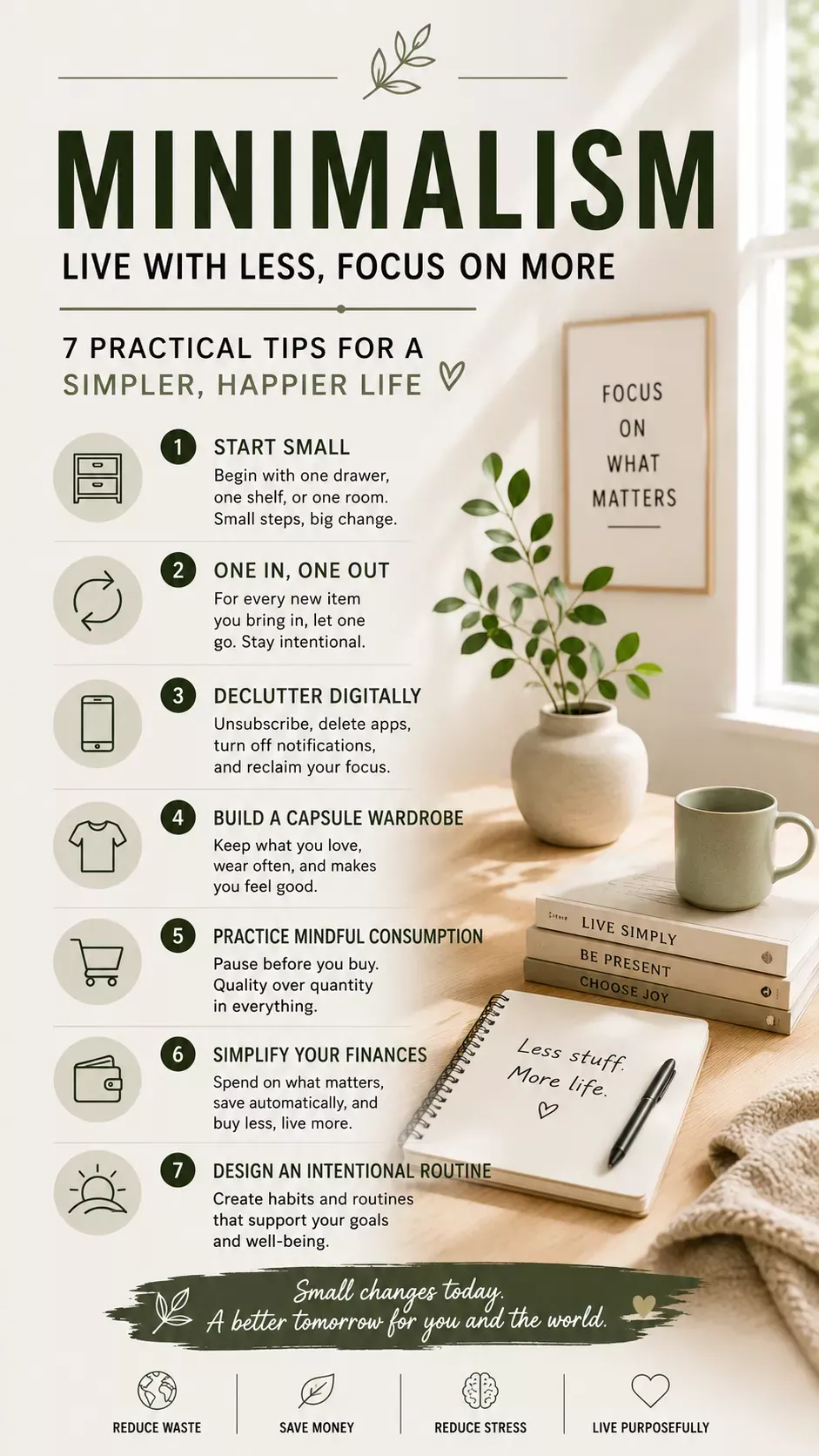
What Is Minimalism, Really?
Before jumping into the tips, let’s clear something up: minimalism is not about owning only 100 things or turning your bedroom into a boring white box that looks like a dentist’s office. Minimalism is really about asking, “Do I actually need this, or is it just taking up space in my life and my brain?”
People who try minimalism often feel happier, less stressed, and more in control of their lives. And honestly, that makes sense. It is hard to feel calm when your room looks like a tornado hit a shopping mall.
More and more people — especially younger generations — are realizing that being healthy, peaceful, and happy matters more than constantly buying stuff. Minimalism is not about having less just to suffer. It is about making room for the things that actually matter.
7 Practical Minimalism Lifestyle Tips to Get Started
1. Start Small — One Drawer, One Shelf, One Room
The fastest way to quit minimalism is trying to clean your whole house in one weekend. That is like deciding to run a marathon because you jogged once around the block.
Start tiny. Clean one drawer, one shelf, or that mysterious corner where random chargers go to die.
Pick up each item and ask, “Do I actually use this, or is it just taking up space?” When you finish one small area, you get a little burst of peace and pride. That feeling is addictive.
Pro tip: Set a timer for 15 minutes. You will be amazed at how much lighter your space — and your brain — can feel.
2. Embrace the “One In, One Out” Rule
This rule is beautifully simple: if something new comes in, something old has to go.
Buy a new hoodie? Donate one. Get a new gadget? Say goodbye to the dusty one hiding in your drawer.
It is like telling your stuff, “Nobody gets in unless somebody checks out.” This habit keeps clutter from sneaking back into your life and makes you think twice before buying things you do not really need.
3. Declutter Your Digital Life
Clutter is not just on your floor. It is also in your phone, your laptop, and that inbox with 4,782 unread emails silently judging you.
Too many apps, notifications, and social media accounts can make your brain feel like 50 people are shouting at once.
Start by:
- Unsubscribing from emails you never read
- Deleting apps you forgot existed
- Turning off annoying notifications
- Putting your phone away for an hour each day
- Following only people who inspire you instead of stress you out
A clean phone can feel almost as satisfying as a clean room. Sometimes even better.
4. Adopt a Capsule Wardrobe
If your closet is packed but you still say, “I have nothing to wear,” welcome to the club. A capsule wardrobe solves that problem by keeping only clothes you actually love and wear.
Think of it as building your own superhero uniform: a few great pieces that fit well and work together. Fewer clothes means less stress, less spending, and no more digging through shirts you forgot you owned.
5. Practice Mindful Consumption — Before You Buy Anything
Minimalism does not mean never buying anything. It means asking, “Do I really want this, or did an ad just trick me?”
A great trick is the 30-day rule. If you want something non-essential, wait 30 days. Most of the time, the excitement disappears faster than your favorite snack.
This idea works for everything: stuff, food, shows, even friendships. Choose fewer things, but choose better ones.
6. Simplify Your Finances
One of the best parts of minimalism is that your wallet can finally breathe.
When you stop buying random things you barely use, you have more money for what actually matters — like travel, hobbies, or simply feeling less stressed. Cancel subscriptions you forgot about, cook at home more often, and save automatically.
Money is not just for buying stuff. It is for buying freedom.
7. Design an Intentional Daily Routine
Minimalism is not only about cleaning your room. It is also about cleaning up your schedule.
Without a routine, life can feel like a browser with 47 tabs open and music playing from somewhere you cannot find. A simple routine helps you feel calm and in control.
Try starting your day without your phone, focusing on one thing at a time, and giving yourself real rest. When your days become less chaotic, your mind follows.
The Bigger Picture: Minimalism and a Better World
Minimalism does not just help you clean your room or save money. It also helps the planet.
Every time you choose not to buy something you do not need, you are casting a tiny vote for a better world. Less stuff means fewer factories pumping out products, fewer trucks delivering boxes, and less trash piling up in landfills. It may seem small, but millions of people making smarter choices can create a huge impact.
That is what makes minimalism so powerful. You are not just simplifying your own life — you are quietly helping the Earth breathe a little easier. And that is pretty amazing for something that starts with cleaning out one messy drawer.
Common Minimalism Myths — Debunked
Myth 1: Minimalism means owning as little as possible.
Reality: Minimalism is not a contest to see who can survive with one toothbrush and two T-shirts. It is about owning the right amount for your life. If something is useful or makes you genuinely happy, it belongs.
Myth 2: Minimalism is only for the wealthy.
Reality: Minimalism can actually help you save money. When you stop buying things just because they are trendy or on sale, your bank account gets a much-needed break. You do not need to be rich to want less clutter and less stress.
Myth 3: Minimalism is cold or joyless.
Reality: Minimalism is not about getting rid of joy. It is about getting rid of the junk that blocks it. When your space is filled only with things you truly love, life feels warmer, lighter, and a lot more meaningful.
Myth 4: You have to do it all at once.
Reality: Absolutely not. You do not need to throw half your belongings out in one dramatic weekend montage. Start with one drawer, one shelf, or one backpack. Small steps are how real, lasting change happens.
Conclusion: Your Journey Begins With One Decision
Minimalism is not a finish line where you suddenly become a perfectly organized person with matching storage boxes. It is a lifelong habit of asking, “What really matters to me?” and letting go of the rest.
The best part? You do not need to change your whole life overnight. Start with one drawer, delete one app, skip one impulse purchase, or say no to one thing that drains your energy.
That is how big changes always begin — with one small choice. And before you know it, your life feels lighter, calmer, and a whole lot more like your own.

- How to Cope With Grief and Loss: A Compassionate Guide – 10/08/2026
- Love Bombing: Signs, Stages, and What to Do – 03/08/2026
- Signs of Anxiety Disorder in Adults You Shouldn’t Ignore – 29/07/2026







Leave a Reply