Quick answer: A peaceful life makes you anxious because your nervous system was calibrated in an environment where calm meant something was about to go wrong. When threat and tension were your baseline, a peaceful life makes you anxious because safety does not feel safe. It feels suspicious. The anxiety is not about the present. It is your body enforcing the rules of a past you have not fully left.
If you have ever wondered why does a peaceful life make me anxious, you are not alone and you are not broken. The experience of feeling worse when things are going well, more unsettled when the chaos fades, more on edge when there is nothing obvious to worry about, is more common than anyone talks about, and it has a specific, well-documented explanation.
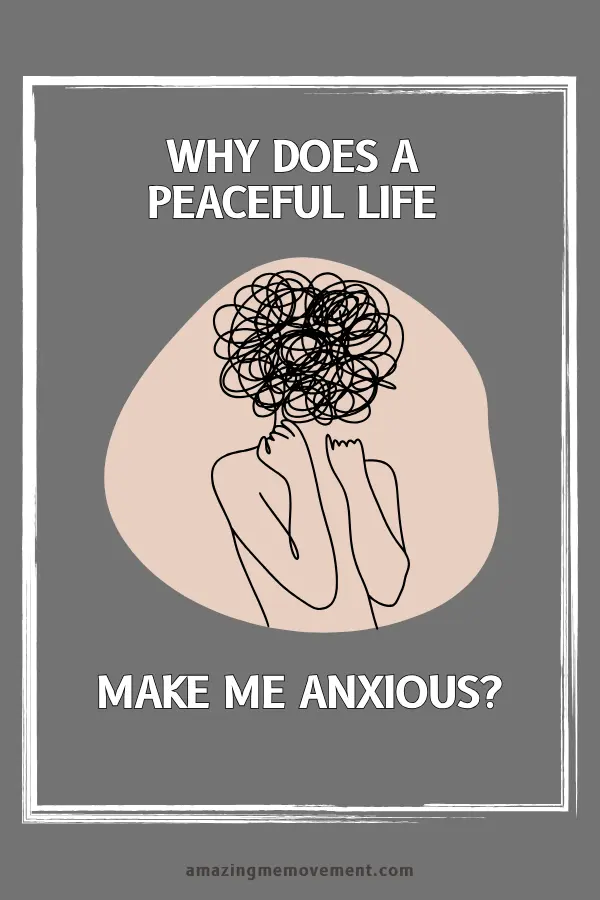
It is not gratitude deficit. It is not pessimism. It is not a personality flaw. It is what happens when a peaceful life makes you anxious because your nervous system was trained in conditions where peace was temporary and danger was the reliable outcome, and it has never fully received the update that things are different now.
In our community at Amazing Me Movement, this comes up often, and with a particular kind of shame attached to it. Women describe finally reaching a stable season of their life and feeling worse than they did when things were hard. They feel guilty for not being happier. They do not understand why the quiet feels threatening.
This article is for them.
Why Does a Peaceful Life Make Me Anxious? The Direct Answer
A peaceful life makes you anxious because your nervous system is measuring the present against a baseline it established in the past, and calm does not match that baseline.
When you grow up in an environment characterized by unpredictability, conflict, emotional instability, or ongoing threat, your nervous system does not calibrate to stillness as its resting state. It calibrates to vigilance. Hypervigilance becomes the neutral. Tension becomes familiar. And familiarity, neurologically, is read as safe.
When that person arrives in a genuinely stable, peaceful life, the nervous system does not relax into it. It scans for what is wrong. Because in its experience, calm was always the prelude to something, never the thing itself. The question “why does a peaceful life make me anxious” is really the nervous system asking: where is the threat I know is coming?
What Is Happening in Your Nervous System: The Nervous System Mismatch
This mismatch between a calm environment and an activated nervous system is explained in part by Dr. Stephen Porges‘ polyvagal theory. Porges describes three states of the autonomic nervous system: the ventral vagal state (safe, social, regulated), the sympathetic state (mobilized, fight or flight), and the dorsal vagal state (shutdown, freeze).
A nervous system that developed in chronic stress or unpredictability spends a significant amount of time in the sympathetic or dorsal vagal states. It does not know the ventral vagal state, the experience of genuine safety, as a home base. When the external environment becomes genuinely calm, there is a mismatch between what the body expects and what it encounters. That mismatch is experienced as anxiety.
In practical terms, a nervous system mismatch in a calm environment means: your body is still running threat-detection software in a room with no threat. The alarm system has no off switch because it was never taught it was safe to switch off.
Where Can Parents Find Trusted Teen Anxiety Treatment Centers in Boise?
Waiting for the Other Shoe to Drop Anxiety
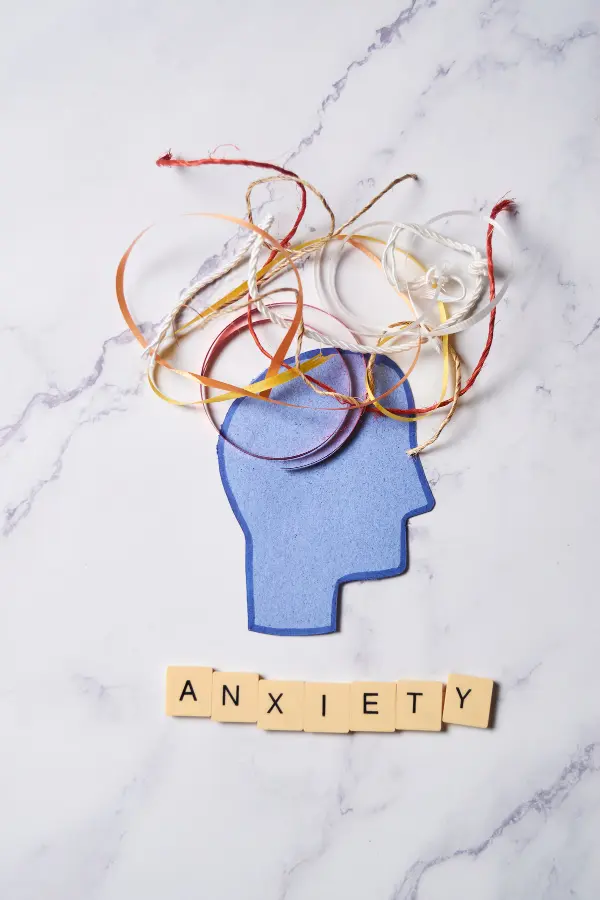
This pattern is one of the most consistent features of a nervous system calibrated to instability.
It sounds like this: things are going well, which means something is about to go wrong. I should not get comfortable. The moment I stop bracing, it will happen. Enjoying this feels dangerous because it will make the fall worse.
This is not irrational catastrophizing in the clinical sense. It is a prediction system drawing on real historical data. If your childhood or early adulthood involved experiences where peace was reliably interrupted, your brain learned an accurate lesson about your environment at the time: calm is temporary and lowering your guard is a liability.
The problem is the brain keeps applying this lesson to a present that is no longer that environment. Dr. Bessel van der Kolk, whose research on trauma documents how the body encodes these threat-detection patterns, describes it as living in the past in the present: the body keeps acting on information that is no longer current.
Addicted to Chaos Psychology: Why Calm Feels Wrong
Addicted to chaos psychology describes the pattern of being drawn back to high-drama, high-stress situations not because you want to suffer but because they feel neurologically familiar and therefore safe.
This is not a character flaw. It is nervous system calibration.
When stress, conflict, and urgency have been your baseline, a life without them does not feel peaceful. It feels empty. Wrong. Like something is missing. The absence of chaos does not register as rest. It registers as a void, and the mind often interprets a void as a problem to be solved.
This is why some people unconsciously create problems when none exist, escalate situations that did not require escalation, or find themselves magnetically drawn to friendships and relationships that reproduce the emotional texture of their most stressful environments. They are not choosing chaos. They are returning to calibration.
Childhood Trauma and Fear of Peace
This connection is direct and well-documented.
When a child grows up in an environment characterized by unpredictability, emotional volatility, neglect, conflict, or ongoing stress, their nervous system does not develop a secure baseline. It develops a stress baseline. As Pete Walker, author of Complex PTSD: From Surviving to Thriving, describes, children in chronically stressful environments develop hypervigilance as a functional adaptation. The constant monitoring of the environment for threat is not pathology. It is how they survived.
The problem is that this hypervigilance does not automatically deactivate when the environment changes. It becomes the nervous system’s default operating mode, which means that in adulthood, when the external environment is genuinely stable, the internal experience still feels like waiting for impact.
Childhood trauma and fear of peace are connected through this mechanism: safety was never the baseline, so safety cannot be fully recognized or inhabited without deliberate, gradual nervous system work.
Why Do I Feel Bored When Life Is Peaceful?

Feeling bored when life is peaceful often accompanies the experience of why does a peaceful life make me anxious, but it is a related and distinct question. It tends to emerge from two overlapping sources.
The first is nervous system calibration. A system trained on high arousal, urgency, and stimulation experiences ordinary life as understimulating. The low-intensity texture of genuine peace does not produce the same neurochemical engagement as stress and crisis. It can genuinely feel flat by comparison.
The second is identity. For many people who grew up in chaos or who have spent years in survival mode, who they are is organized around managing, coping, and navigating difficulty. When the difficulty goes away, a question surfaces that is harder to answer than it looks: without the crisis to manage, what am I? Without the problem to solve, who do I become?
Feeling bored when life is peaceful is often less about boredom and more about a self that has not yet learned to exist in stillness.
What It Looks Like in Real Life
A scenario we hear often in our community.
The question of why does a peaceful life make me anxious rarely surfaces when things are hard. It surfaces when they finally get better. Here is what that looks like. Better job, healthier relationship, enough financial breathing room. She arrived. And instead of feeling the relief she had anticipated, she felt worse. She kept waiting for something to go wrong. She felt restless and irritable in a way she could not explain to anyone. She started picking fights over small things. She found herself doom-scrolling, looking for evidence of the disaster she was sure was coming.
She did not understand why she could not just enjoy this. She felt guilty, ungrateful, and quietly terrified. She thought something was wrong with her.
Nothing was wrong with her. Her nervous system had simply never been taught that this, the stillness, the stability, the absence of crisis, was allowed to be the destination.
How to Begin Tolerating Peace
Learning to stop asking why does a peaceful life make me anxious, and instead building tolerance for it, is a skill. It sounds absurd, but it is one of the most important things a nervous system calibrated to stress can learn.
Name what is happening without judgment
When the anxiety surfaces in a calm moment, try naming it accurately rather than fighting it. “My nervous system is scanning for threat because that is what it learned to do. There is no actual threat right now.” This is not positive thinking. It is accurate thinking, and it interrupts the automatic interpretation of calm as danger.
Practical Tips For Dealing With Relationship Anxiety
Build tolerance in small doses
Do not attempt to sit in sustained peace if it feels unbearable. Start with small windows. Five minutes of doing nothing. A meal eaten without a screen. A walk without a podcast. Each small experience of peace that does not result in disaster builds evidence for the nervous system that stillness is survivable.
Work with the body, not just the mind
Nervous system calibration is not a cognitive process. The anxiety in peaceful environments lives in the body, not just in thoughts. Somatic practices, breathwork, gentle movement, grounding, work at the level where the pattern actually lives. A trauma-informed therapist trained in somatic approaches or EMDR can accelerate this significantly.
Notice the waiting and interrupt it
When you catch yourself waiting for the other shoe to drop, pause and ask: what evidence do I actually have right now that something is wrong? Usually the answer is none. The waiting is a habit, not a prediction. You are allowed to notice that you are waiting without acting as if the drop is inevitable.
Let peace be unfamiliar without making it dangerous
You do not have to feel comfortable in peace right away. You just have to stop treating the discomfort as confirmation that something is wrong. Unfamiliar is not the same as unsafe. Learning that distinction in the body, not just the mind, takes time and repetition.
Checklist: Signs Your Nervous System Is Struggling With Peace
If you are asking why does a peaceful life make me anxious, these signs will feel familiar.
☐ Good news is followed immediately by worry about when it will end ☐ Calm environments feel more unsettling than stressful ones ☐ You feel guilty or suspicious when things are going well ☐ You find yourself creating problems or escalating when nothing is wrong ☐ Boredom in peaceful periods feels intolerable or even threatening ☐ You cannot fully enjoy positive things because you are already anticipating the loss ☐ Stillness makes you feel like you are forgetting something important
Conclusion
If a peaceful life makes you anxious, you are not ungrateful. You are not self-sabotaging. You are not broken. You are a person whose nervous system learned to survive a particular kind of environment, and it is still following those instructions even though the environment has changed.
The work is not about forcing yourself to be happy or convincing yourself things are fine. It is about slowly, deliberately giving your nervous system new information. Peace is safe. Stillness is allowed. The calm is not the prelude to something. It can simply be the thing itself.
If a peaceful life makes you anxious, you did not come this far to keep living like the crisis is always one breath away. You are allowed to land.
If this resonated with you, save it and come back to it on the days when the quiet feels wrong. Share it with someone who cannot enjoy good things without waiting for them to end. And explore Amazing Me Movement for more resources on understanding the nervous system patterns that shape everything from how you relate to others to how you relate to your own life.
Embrace Tranquility With These 20 Uplifting Quotes For Anxiety
10 Tips On Handling Anxiety: Reclaim Your Life From Stressors
How To Deal With Anxiety Without Medication in 5 Steps
7 Law of Attraction Techniques That Actually Work (Backed by Psychology)
Frequently Asked Questions
What is the 3-3-3 rule for anxiety?
The 3-3-3 rule is a grounding technique for anxiety that involves naming three things you can see, identifying three sounds you can hear, and moving three parts of your body. It works by redirecting the nervous system’s attention from internal threat signals to present sensory experience. For people whose anxiety is triggered by peaceful environments, it is particularly useful as a way of anchoring in the present moment rather than scanning the future for anticipated disaster.
Can an argument trigger anxiety even when things are peaceful?
Yes. For people whose nervous systems are calibrated to conflict, an argument can paradoxically feel more manageable than sustained calm, because it is familiar. It can also retrigger patterns established in childhood, where conflict felt like the true state of things and peace before it was the warning. If you notice that arguments feel grounding in an unexpected way, this is information about how your nervous system learned to orient.
Why does happiness make me anxious?
Happiness triggers anxiety for many people because it represents a state that, in past experience, was temporary and followed by loss or difficulty. The nervous system learns to associate good feelings with incoming threat because the pattern repeated often enough. This is sometimes called “cherophobia” in popular psychology, though the clinical reality is more accurately a nervous system trained to mistrust positive states as sustainable.
Why does relaxing give me anxiety?
Relaxing gives you anxiety because it requires lowering the vigilance that your nervous system has been using as a protective mechanism. Dropping that vigilance feels dangerous because the nervous system does not yet have enough evidence that it is safe to do so. The anxiety is not irrational. It is the threat-detection system doing exactly what it was trained to do in an environment where dropping your guard was a liability.
How do you fix relaxation-induced anxiety?
Relaxation-induced anxiety is addressed through gradual, consistent exposure to small periods of safety, paired with work to update the nervous system’s baseline. This is not a quick fix. It involves titrated doses of stillness that do not result in disaster, building evidence over time that peace is not a trap. Somatic therapy, EMDR, and nervous system regulation practices such as breathwork are among the most effective approaches. The goal is not to think your way into peace. It is to give your body enough repeated experiences of safe stillness that it begins to recognize safety as home.








Leave a Reply